You are on your second day of work.
Your supervisor walks over again.
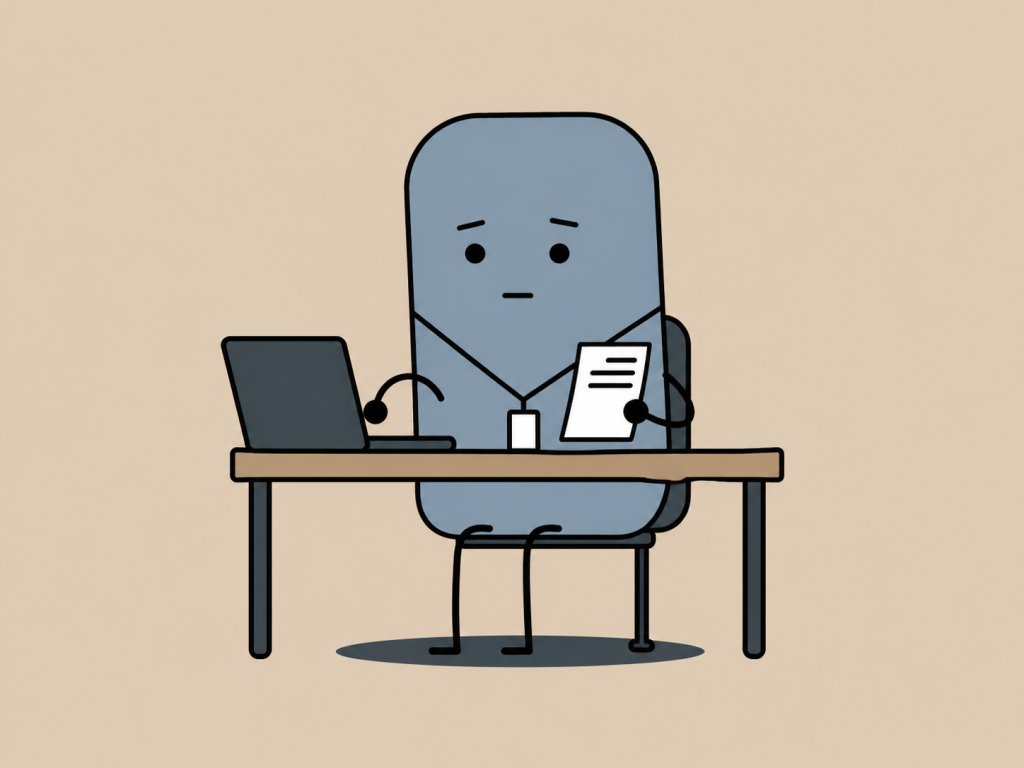
You paused for maybe two minutes because you were trying to understand the document on your screen.
Before you can explain, she asks sharply: “What are you doing?”
Later, you ask a question because you genuinely do not want to make mistakes. She snatches the paper from your hand, explains it impatiently, and somehow makes you feel embarrassed for asking.
Then comes the moment that stays with you.
You get something wrong for the first time.
And she raises her voice.
At some point, you stop focusing on learning the job properly.
You start focusing on not triggering her.
The problem is not just that your boss is “strict”
A lot of early-career employees struggle to identify what they are actually experiencing. Especially in smaller Singapore SMEs, there is a common assumption that harsh treatment is simply part of “real working life.” So when a manager becomes aggressive during onboarding, people tell themselves:
- “Maybe I’m just slow.”
- “Maybe this is normal.”
- “Maybe I need to toughen up.”
But there is a difference between:
- high standards,
- pressure,
- and a workplace that creates fear.
A demanding boss still wants you to succeed.
A fear-based boss mainly wants you to stop becoming a source of inconvenience.
Those are very different environments.
Some workplaces treat onboarding like a pressure test
Good onboarding reduces uncertainty.
Bad onboarding weaponises it.
In healthier workplaces, your first few weeks are understood as a transition period. Questions are expected. Mistakes are corrected.
Clarification is normal.
In some SMEs, especially very lean ones, the mentality is different. The expectation becomes: “Figure it out quickly and don’t slow me down.” Usually this happens in environments where:
- the team is understaffed,
- the manager is overstretched,
- processes exist mostly inside one person’s head,
- and patience is treated as inefficiency.
So instead of training people properly, the workplace starts filtering for who can survive pressure.
The issue is not that the boss wants competence.
The issue is that competence is expected before stability, context, or psychological safety are provided.
Fear changes the way people work
At first, you are trying to learn.
Then gradually, you start trying not to get scolded.
That sounds small, but it changes the entire way someone operates.
You stop asking questions early.
You rehearse messages before sending them.
You pretend to look busy because you are scared someone will think you are slacking.
You avoid clarification because the emotional cost feels too high.
From the outside, it can look like the employee is becoming quieter or less proactive.
But internally, they are adapting to unpredictability. This is why fear-based workplaces often create more mistakes over time, not fewer.
People stop communicating honestly.
What you are experiencing has three layers
1. The visible layer: aggression
This is the obvious part:
- yelling,
- slamming tables,
- harsh tone,
- constant checking,
- irritation at questions.
Most people focus only on this layer.
2. The operational layer: weak systems
In many small companies, onboarding is informal or barely exists. There may be:
- no documentation,
- no structured training,
- unclear expectations,
- and very little separation between urgency and emotion.
So frustration spills directly onto juniors. The employee becomes the buffer for organisational chaos.
3. The psychological layer: fear replacing learning
This is the most damaging layer.
Once someone becomes afraid to ask questions, they stop operating from curiosity and start operating from self-protection.
That is usually when growth slows down.
Not because the employee is incapable. But because the environment has trained them to prioritise safety over learning.
This is more common in Singapore than people admit
Particularly in smaller SMEs, there is often a strong “just adapt first” mentality.
Hierarchy matters. Seniority often comes with emotional permission.
And younger employees are expected to absorb pressure quietly. You see this dynamic even more strongly when:
- the company is very lean,
- the manager has never been trained to manage people,
- or the employee is dependent on probation or work pass approval.
That last part matters.
When someone feels they cannot leave easily, they tolerate behaviour they would otherwise reject.
So the employee stays, becomes anxious, and slowly starts wondering whether all workplaces are secretly like this. Usually they are not.
Some workplaces are stressful because the work itself is difficult. Others are stressful because the environment is emotionally unstable.
Learning to tell the difference is an important career skill.
What usually happens next
People tend to respond to this environment in a few predictable ways.
Some overcompensate. They become hyper-vigilant and emotionally exhausted trying to avoid mistakes.
Some shut down completely. They speak less, contribute less, and emotionally detach.
Others internalise the treatment and conclude: “Maybe I’m just not capable.”
That conclusion is often inaccurate.
A workplace that constantly destabilises people creates distorted self-perception. After a while, it becomes difficult to tell whether you are genuinely underperforming or simply under-supported.
The goal is not immediate confrontation
If you are early in your career, especially in a weak job market, you do not always need to react dramatically on Day Three.
You need clarity first.
Observe patterns. Ask yourself:
- Does the behaviour improve after onboarding?
- Is the aggression occasional or constant?
- Are mistakes corrected constructively at all?
- Can questions still be asked safely if phrased carefully?
- Is everyone tense around this person, or only new staff?
Those distinctions matter.
At the same time, protect yourself practically. Document instructions. Write things down immediately after discussions. Ask concise questions instead of broad ones.
Instead of: “I don’t understand this.”
Try: “Just confirming: should I follow Format A for this section?”
This reduces friction while still helping you clarify expectations.
You are not trying to “win” the environment. You are trying to navigate it while assessing whether it is sustainable.
And quietly, you should keep building optionality. Not because every difficult boss requires immediate resignation. But because fear becomes harder to think clearly inside when you feel trapped.
Strict workplaces still need psychological safety
A workplace can be demanding without being humiliating. It can move quickly without making juniors afraid to speak. It can correct mistakes without making employees panic every time they ask a question.
That distinction matters because many early-career workers accidentally normalise dysfunction too early.
They assume:
- “This is just adulthood.”
- “This is just Singapore work culture.”
- “This is just how SMEs are.”
Sometimes the issue is not your resilience.
Sometimes the company is simply poor at onboarding and emotionally unmanaged.
And once a workplace punishes people for asking questions, mistakes usually get worse — not better.
Because employees stop trying to learn openly. They start trying to survive quietly.
Once you recognise that shift clearly, workplaces become easier to read. Not necessarily easier immediately. But easier to understand.
Leave a Reply